

Aero-TV: Cessna’s Next-Gen CJ – The Citation CJ4 (Part 1)
December 15, 2009
 A Much Upgraded CJ Makes Ready To Enter The Market
If it ain’t broke, don’t fix it… how many times have you heard that? Well, as good as that advice might be for most folks, its but an unfair limitation on the folks at Cessna who have a habit of taking perfectly great little airplanes and tweaking them enough to make them remarkably and demonstrably better… as appears to be th case with Cessna’s upcoming CJ4.
The keyword involved with the CJ4 program is “More.” The CJ4 adds a number of aerodynamic enhancements as well as the Williams FJ44-4A engine to amp up the performance benefits numbers. Each of the FJ-44As generates 3,400 pounds of thrust, while the resultant max payload becomes 2100 pounds — with a full-fuel payload of a solid 1000 pounds. At max takeoff weight, the CJ4 will require as little as 3300 feet of runway and only 2665 feet to land.
CJ4s can also climb directly to 45,000 feet in just 28 minutes, and offer up a cruise of 451 knots — putting it solidly in the ‘500-mph club.’ With its NBAA IFR 100 nm reserves, the CJ4 boasts a range of 1963 nm. Like the rest of the CJ pack, the FADEC-augmented bird is designed for eventual single-pilot certification.
Copyright 2009, Aero-News Network, Inc., ALL Rights Reserved.
FMI: www.cessna.com, www.aero-tv.net, www.youtube.com/aerotvnetwork, www.twitter.com/aeronews
Duration : 0:7:39
Aero-TV: Cessna’s Next-Gen CJ – The Citation CJ4 (Part 2)
December 10, 2009
 A Much Upgraded CJ Makes Ready To Enter The Market
If it ain’t broke, don’t fix it… how many times have you heard that? Well, as good as that advice might be for most folks, its but an unfair limitation on the folks at Cessna who have a habit of taking perfectly great little airplanes and tweaking them enough to make them remarkably and demonstrably better… as appears to be th case with Cessna’s upcoming CJ4.
The keyword involved with the CJ4 program is “More.” The CJ4 adds a number of aerodynamic enhancements as well as the Williams FJ44-4A engine to amp up the performance benefits numbers. Each of the FJ-44As generates 3,400 pounds of thrust, while the resultant max payload becomes 2100 pounds — with a full-fuel payload of a solid 1000 pounds. At max takeoff weight, the CJ4 will require as little as 3300 feet of runway and only 2665 feet to land.
CJ4s can also climb directly to 45,000 feet in just 28 minutes, and offer up a cruise of 451 knots — putting it solidly in the ‘500-mph club.’ With its NBAA IFR 100 nm reserves, the CJ4 boasts a range of 1963 nm. Like the rest of the CJ pack, the FADEC-augmented bird is designed for eventual single-pilot certification.
Copyright 2009, Aero-News Network, Inc., ALL Rights Reserved.
FMI: www.cessna.com, www.aero-tv.net, www.youtube.com/aerotvnetwork, www.twitter.com/aeronews
Duration : 0:8:56
ANN Flight Test – Flying Cessna’s Skycatcher
November 18, 2009
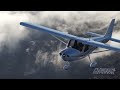 Finally… ANN is proud to present the first published flight test data on Cessna’s long-awaited LSA… the C-162 Skycatcher. Worth the wait, the Cessna 162 may be one of Cessna’s very best efforts yet… thoroughly maximizing what it is to be an LSA… while being true to the outstanding stability and control profiles that have been a part and parcel of Cessna’s entry-level aircraft products for many decades.
Right up front, let us tell you, the Skycatcher does NOT disappoint… it is a thoroughly sweet little airplane with great manners, a pleasant aerodynamic profile, as good a performance envelope as LSA regs allow and on top of all that, is just plain fun to fly. In other words, the Skycatcher is one heck of a nice little airplane and a fitting way for Cessna to put its best foot forward in bringing forth a new generation of entry level airplanes. Of particular note is Garmin’s EXCELLENT G300 glass panel, the easily operated and powerful addition of the TCM O-200D and the WIDE comfy cabin. But More than that… its just a sweetie in the air… simple, reasonably fast, agile and with nary the hint of a bad habit. Yeah, we had a ball with the critter.
Cessna’s minions tell ANN that the SkyCatcher is designed from spinner to tail to set the new standard for an entry-level aircraft. Though manufactured as an LSA, the SkyCatcher meets all the required ASTM standards for certification while providing safety, reliability, and utility.
The airplane is equipped with the proprietary Garmin G300 avionics package, and is powered by a composite propeller mated to a Continental O-200D engine developed specifically for the Light Sport market. It also features a 44-inch wide cabin, ergonomic seats, accessible cargo area, and a unique under-panel center stick control. Cessna claims the industry’s most extensive network of dealers and service centers.
Copyright 2009, Aero-News Network, Inc., ALL Rights Reserved.
FMI: www.cessna.com,
www.aero-tv.net,
www.youtube.com/aerotvnetwork,
www.twitter.com/aeronews
Duration : 0:5:37
Quartz Mountain Re-Intro’s The Luscombe 11E On Aero-TV
January 14, 2009
 All Things Old May Be New Again?
Its been a long tough road for the folks of Quartz Mountain Aerospace in their quest to bring a fabled airframe back to life. Following years of sometimes-choppy operations, a small Altus, OK-based planemaker might finally be heading for smoother skies. Quartz Mountain Aerospace recently earned a significant milestone on its way towards having its name ociated with the likes of Cessna, or Mooney: the company earned its first airworthiness certificate from the FAA.
Aero-TV caught up with QMA at the 2008 AOPA Fly-In to see an example of their handiwork. Formerly known as Luscombe Aircraft Corp., the company says the Model 11E — which will be used primarily as a trainer — is an adaptation of the Luscombe Model 11A Sedan, introduced in 1946. The new model is distinguished by superior in-flight and landing stability over the tailwheel-equipped Sedan.
Like with innumerable other upstart planemakers, QMA’s trip to this point hasn’t been an easy one. As ANN reported in June 2007, Quartz Mountain attributed the need for layoffs (since rescinded) to delays in FAA inspections related to earning production certification, and various parts, training, and supply issues. With the ability to now produce sell its Luscombe 11E en masse, Quartz Mountain’s 110,000-square-foot work floor — eerily quiet just a year ago — is now filled with the noises of a busy production facility.
Quartz Mountain has also taken recent steps to show it’s serious about playing in the big leagues. As ANN reported last April, QMA announced it will be the first to offer Garmin’s G950 glass-panel avionics suite.
Let’s Take A Look At A NEW Classic, The Luscombe 11E, With Aero-TV
FMI: www.qmaero.com
Copyright 2008, Aero-News Network, Inc., ALL Rights Reserved.
Duration : 0:5:56
ALL Things Robinson: RHC’s Founder Talks About The …
December 21, 2008
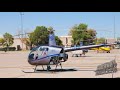 Frank Talks About The Future of The R44, Helo Training, The Silver State Fiasco, And More!
Life has been good for Frank Robinson and the R22/44/66 family. After years of building expertise throughout the helicopter industry, Frank Robinson set out several decades ago to do what they said could not be done… create a powerful new civil helicopter company. He did it… and probably did so beyond even his own imaginings.
For example, as 2007 was coming to a close, the folks at Robinson Helicopter Company achieved another milestone when their 8000th helicopter was flight certified. The new, solid green, Robinson R44 Raven II S/N 11984 was ordered by SkySales Aviation (Christchurch, New Zealand) for a private owner.
In the past few months, RHC played host to a visit by President Bush… no doubt attracted by RHC’s exceptional overseas helicopter sales… making them a major aerospace exporter and a great place to do a little ‘politicking.’ In RHC, White House staffers chose an appropriate location for President Bush to hawk the benefits of foreign trade since Robinson Helicopters sells 70 percent of its production overseas. A point hammered home by the President.
“You can’t tell the people at Robinson Helicopter that trade isn’t good,” Bush said Wednesday. “When 70% of that which you manufacture gets sold somewhere else other than the United States, they ought to have a sign walking in here and say, ‘Trade is not only good, it is great; and we want the federal government to make it easier for us to sell products.'”
Better yet, work continues on Frank’s next design… the Rolls Royce RR300 powered turbine helicopter…a first for RHC.
Robinson Helicopter Company was founded in 1973. The first R22 was delivered in October 1979. In 1993, the R44 came online and is now the best selling helicopter in the world. The R44 is offered in two models: The Raven I and the more powerful Raven II. The Raven II is available in four specialty configurations: Police Helicopter, Newscopter, Clipper, and IFR …
Duration : 0:9:28
The Air Safety Foundation’s David Wright Updates …
December 11, 2008
 ASF’s Vice President of Operations Talks About Air Safety Programs
AOPA… well-known as the 600 pound gorilla of aviation ociations, has a cousin that isn’t as well-known… though it should be. Cognizant of the issues involved in aviation safety — and the many controversies surrounding how to deal with them, the Air safety Foundation has NOT sat on the sidelines of this issue… but instead has taken a leading role in the examination of a myriad of safety issues and the subsequent education of the pilot population so that those issues might be better understood, throughout the industry.
The AOPA Air Safety Foundation is ‘a nonprofit, tax exempt organization promoting safety and pilot proficiency in general aviation through quality training, education, research, analysis, and the dissemination of information.’
Aero-TV sat down with several ASF and AOPA staffers over the last few months to get a feel for the organization and the people that staff it… this time catching up with David Wright, ASF’s Vice President of Operations.
David joined ASF in November 2002 and serves as the vice president of operations. In that role he is responsible for all of ASF’s day-to-day operations in support of the Foundation’s strategic objectives. He also contributes to the live and online ASF safety seminars that reach more than 100,000 pilots yearly with updated flight safety information.
He holds an MBA from the University of Maryland and a bachelor’s degree in aeronautics from the University of North Dakota, and has been both lead flight instructor for UND and an airline pilot with USAir Express. He holds an FAA commercial pilot certificate, is a flight instructor with both instrument and multi-engine ratings, and has logged about 2,500 flight hours.
ASF’s David Wright Talks Safety With Aero-TV
FMI: www.asf.org, www.aero-tv.net, www.youtube.com/aerotvnetwork, http://twitter.com/AeroNews
Copyright 2008, Aero-News Network, Inc., ALL Rights Reserved.
Duration : 0:8:3
Aero-TV Profiles A ‘Mammoth of A Miniature’
November 5, 2008
 Dan Gryder’s Herpa DC-3
Dan Gryder may just be the luckiest guy in aviation… as he gets paid to fly a spotless, pristinely-maintained Douglas DC-3 throughout the country, and even offers interested pilots the chance to earn the ONLY DC-3 type rating available today. ANN’s Paul Plack talked with Dan, who brought the Herpa DC-3 to Florida this past spring, about the plane’s history, and what it can do.
When Dan Gryder isn’t flying passengers around the world in 757s and 767s for a major airline, he can be found providing DC-3 flight instruction at his training center or shaking hands and offering DC-3 tours at air
shows. He has over 11,000 flight hours and type ratings in numerous large aircraft. He’s been a flight instructor for more than 25 years and holds the FAA designations of GOLD SEAL CFI, CFII, MEI, ATP and AGI.
Dan and his team of DC-3 experts operate what appears to be the only remaining DC-3 flight training schools, based near Atlanta. If you’re looking for more than just an introductory lesson or two, Dan and his team provide complete pilot in command and second in command training — all the way through the actual type rating.
The ‘Gooney’ is no stranger to World War II veterans and historians who will remember the DC-3 as the C-47 Skytrain. The military version of this remarkable flying machine aircraft was used by Allied Forces to transport troops and supplies around the world. The plane was nicknamed “the Gooney Bird” as it swiftly earned a rep as a sturdy (even forgiving) and reliable workhorse — capable of flying nearly anywhere in almost any weather. The US Navy referred to a modified version of the plane as the R4D and the British called her the Dakota. Still others called her the Skytrooper. No matter what you call her, she’s a piece of aviation history to be treasured.
Come Along With Aero-TV and Take A Trip Through History Aboard The Herpa DC-3
FMI: www.thedc-3network.com, www.herpa.de
Copyright 2008, Aero-News Network, Inc., ALL Rights Reserved.
Duration : 0:9:48
Aero-TV: Next-Gen Airplanes Require Next-Gen Training (Part
October 30, 2008
 Just How Will They Train All Those Eclipse Pilots, Anyway?
E-I-C Note: One of the wonders of the computer world is the gamut of amazing capabilities we have at our possession… but the curse of it all is revealed when these new-fangled wonder go “Tango-Uniform.” Part one of this program was presented October 14th and as we were preparing to upload Part 2, a so-called redundant drive array signaled that it was having problems… and it did. That’s all fixed now, and so we’re pleased to (belatedly) present Part Two of “Next-Gen Airplanes Require Next-Gen Training.” We think you’ll see it was worth waiting for.
Despite all the growing pains ociated with getting the Eclipse program up to speed, one thing continues unabated… Eclipse Pilot training. A visit to the factory flight training facility a few weeks back showed ANN that this was one part of the program that seems ready and able to keep up with the demand, and that Director of Customer Training, Randy Brooks, seems more than optimistic about their efforts.
Just last January, Eclipse told us that the FAA had awarded Eclipse’s training provider, Higher Power Aviation (HPA), authorization to conduct Eclipse 500 Type Training under HPA’s Part 142 Training Certificate. The authorization increases Eclipse’s training capacity and enables the company to type rate customers entirely in its certified Level D Full Motion simulators.
During the Part 142 certification process, the FAA examined Eclipse’s training curriculum and analyzed how Eclipse uses its advanced simulator to train and type rate customer pilots prior to an aircraft delivery. The certification came just two weeks after the FAA certified Eclipse’s first flight simulator as a Level D Full Motion device.
The first class of customer pilots began their flight training in the Level D simulator within days, with subsequent classes beginning every two weeks. Eclipse now has three Level D Full Motion simulators in operation, which allows the company to train and type rate 60 customers per month. The certification was accomplished through partnerships between Eclipse Aviation and HPA of Dallas, TX; OPINICUS of Lutz, FL; and Flight Simulation Company (FSC) of Amsterdam, The Netherlands.
Eclipse built a state-of-the-art Flight Training Facility at Double Eagle II Airport on Albuquerque’s west side just over a year ago. Eclipse flight skills essment eval programs and HPA’s Part 142 type rating training are conducted in the simulators.
FMI: www.eclipseaviation.com, www.aero-tv.net, www.youtube.com/aerotvnetwork, http://twitter.com/AeroNews
Copyright 2008, Aero-News Network, Inc., ALL Rights Reserved.
Duration : 0:6:33

