

Aero-TV: Improving the Citation X – Cessnas Elliptical Winglets Update
April 15, 2011
Manager Gary Genge Discusses the Winglets Retrofit Update From its maiden flight in September of 2007, to its first retrofit in August of 2009, Cessna’s Citation X Elliptical Winglets update has made extraordinary progress in the past two years. After receiving their supplemental type certificates from the FAA and EASA for the installation in June, Cessna Aircraft Company announced the first delivery of the Citation X to be fitted with Elliptical Winglets. Though the first installation was carried out at the Wichita Cessna Service Center, plans are currently underway to expand the Elliptical Winglet installation to all nine Cessna Service Centers throughout the US and Europe. A collaborative effort with the Wichita-based Winglet Technology, the patented design optimizes lift distribution along the entirety of the Citation X wingspan. The resulting reduction in induced drag significantly improves the operational performance of the Citation X. The exceptional technology has increased takeoff weight and climb performance in hot or high departure locations; the Citation X can now climb to FL450 at maximum takeoff weight (increased to 1200 pounds), with a maximum cruise speed for altitudes above FL410 increased up to 15 knots. In addition, the Elliptical Winglet installation dramatically increases the aircraft efficiency, providing for a 4-5% reduction in fuel consumption and a maximum range increase of up to 150 nautical miles. Copyright 2009, Aero-News Network, Inc., All …
Aero-TV: Flight of Inspiration – Speaker Jessica Cox Receives Her Wings
September 16, 2010
Able Flight Wing Recipient, Jessica Cox, Speaks to EAA AirVenture Attendees. On July 28th, 2009, Able Flight held a special ceremony to recognize the tremendous achievements of three remarkable new pilots, Mal Zakery, Jeremy Maddox, and Jessica Cox. Each surmounted significant physical disabilities to attain their pilots license in recent years. Special guest Miles OBrien said, Aviation is hope. This shows that hope does indeed triumph. There has not been, however, an accomplishment in aviation history quite like Jessica Coxs triumph. Born without arms, Cox has spent her 26 years proving that anything is possible with perseverance and passion, despite the challenges that one might face. On May 11th, 2008, Cox became the only licensed pilot in the world to fly with only her feet. Instructed by Parrish Traweek, Cox received her training in an Ercoupe 415-C with the generous support of an Able Flight Scholarship. When not taking to the skies, Jessica Cox travels the world as a motivational speaker sharing her incredible story and her unique insights into self-empowerment. Able Flight has been a strong visionary of that same attitude; created by pilots who understood the transformative experience of flight, the non-profit organization strives to enable those with disabilities an opportunity to receive flight training. Supported by donations and sponsorships, Able Flight rewards aspiring pilots with scholarships each year to pursue this unique challenge. Join Aero-TV as we …
Aero-TV: The Cessna Skycatcher – Testing the Aircraft Across Country
July 24, 2010
Test Pilot Kirby Ortega Discusses the Advantages of Cessna’s New LSA At the 2009 AOPA Summit, attendees experienced an up-close encounter with Cessnas newest aircraft to enter the LSA market. Since the announcement of the 162 Skycatcher program in 2007, Cessna has received over 1000 orders. A two-place, single-engine piston, high-wing aircraft, the Skycatcher is a strong contender in the training market. Powered by the Continental O-200D 100-hp engine, the 162 Skycatcher weighs in at an extremely light 830 pounds empty weight, 280 pounds less than the 150. As a result, the aircraft features a cruise speed up to 118 knots and a maximum range of 470 nautical miles. After departing from San Diego’s King Schools, where the first production-conforming Skycatcher had been stationed during the development of Cessna’s pilot training curriculum, Chief Test Pilot Kirby Ortega flew the aircraft to Tampa, Florida. The three-day journey allowed Ortega to become more familiar with the aircraft’s handling and features, including the all-new Garmin G300 avionics system. With the increase in situational awareness and decrease in heads-down time, the G300 provides a great educational advantage for both students and instructors alike. The 162 arrived at the AOPA Summit as part of Cessna’s demonstration of its new Internet-based flight training software, available through Cessna’s Pilot Center network and developed in conjunction with Kings Schools. The web-training program, coupled with the …
Aero-TV Gets Educated At Delta Connection Academy (Part …
June 21, 2010
A Major Airline Training Program Talks About Its Successes Aero-TV crews visited the Delta Connection Academy as it unveiled its new 27000-square foot hangar at Sanford International Airport in Florida, during a grand opening held to celebrate a capstone event in the Academy’s extensive renovation and expansion. The all-new hangar is central to Delta Connection Academy’s reputation as one of the premier professional flight training facilities in the world. The opening underscores a multi-year plan to take Delta Connection Academy to a new level of professionalism and competence. Delta Connection Academy is a wholly-owned subsidiary of Delta Air Lines, operating a fleet of more than 115 aircraft, including a new fleet of 50 new Cirrus SR20 G2 aircraft and seven Level 6 AeroSim Technologies Flight Training Devices. The Academy has trained students from 90 different countries and has placed pilots with 30 airlines including (but not limited to) all Delta Connection carriers, American Eagle Airlines, ExpressJet Airlines and Cape Air/Nantucket Airlines. The new hangar debut is a major milestone in the school’s multi-year business plan that includes newly-renovated buildings, adding 50 all-new Cirrus SR20s (with an option for eight more) to the Academy’s 115 single-engine and twin-engine fleet, providing students with state-of-the art Level 6 AeroSim FTDs (Flight Training Devices), AATDs (Advanced Aircraft Training Devices) and modernized, scenario-based curricula. The …
Aero-TV: ANN Flight Test – Flying Cessna’s Skycatcher
May 21, 2010
Finally… ANN is proud to present the first published flight test data on Cessna’s long-awaited LSA… the C-162 Skycatcher. Worth the wait, the Cessna 162 may be one of Cessna’s very best efforts yet… thoroughly maximizing what it is to be an LSA… while being true to the outstanding stability and control profiles that have been a part and parcel of Cessna’s entry-level aircraft products for many decades. Right up front, let us tell you, the Skycatcher does NOT disappoint… it is a thoroughly sweet little airplane with great manners, a pleasant aerodynamic profile, as good a performance envelope as LSA regs allow and on top of all that, is just plain fun to fly. In other words, the Skycatcher is one heck of a nice little airplane and a fitting way for Cessna to put its best foot forward in bringing forth a new generation of entry level airplanes. Of particular note is Garmin’s EXCELLENT G300 glass panel, the easily operated and powerful addition of the TCM O-200D and the WIDE comfy cabin. But More than that… its just a sweetie in the air… simple, reasonably fast, agile and with nary the hint of a bad habit. Yeah, we had a ball with the critter. Cessna’s minions tell ANN that the SkyCatcher is designed from spinner to tail to set the new standard for an entry-level aircraft. Though manufactured as an LSA, the SkyCatcher meets all the required ASTM standards for certification while providing safety, reliability, and utility. The airplane is equipped with the …
Aero-TV: The Tecnam P2006T – Energizing the Flight Training Market
March 25, 2010
Mon, 04 January 2010 . Rotax Powered Twin Proves Multi-Engine A/C CAN BE Cost-Effective Mostly known for their efforts in the LSA aircraft game, Tecnam (which has been building planes since 1948, by the way), has been building serious buzz for a new program for a few years — a light twin that could shake up the business a fair amount. Built around the highly-regarded Rotax 912S, the P2006T is destined to do something that few twins have been able to do over the years… entice owners looking for a cost-effective flyer. With only 100 hp per side, the 200 hp P2006T, with constant-speed/full-feathering props, will have a cruise speed (at 75%) of 140 kts. The bird is a four seater, with high wing and retractable gear. The cockpit is currently scheduled to be filled by the buyer’s choice of a Garmin G1000 or standard gauges. Stall speed (Vso) is 49 knots, while the M/E climb rate is 1140 fpm and in single engine mode, still manages to eke out 230 fpm. With 880 pounds of useful load, the P2006T needs 898 feet for takeoff (with 1213 feet to clear the stereotypical 50 foot obstacle), and 656 feet for landing roll out (a total of 1279 feet over the 50 foot obstacle). The retractable gear system is electric. The P2006T has a 400 liter fuel capacity (about 105 gallons) and offers 620 nm range. In addition to the fact that the Rotax 912S is fairly easy on the fuel flows, this is an engine that can burn auto-gas without issue… offering even greater economies. As the first all-new …
Aero-TV: Cessna’s Next-Gen CJ – The Citation CJ4 (Part 1)
December 15, 2009
 A Much Upgraded CJ Makes Ready To Enter The Market
If it ain’t broke, don’t fix it… how many times have you heard that? Well, as good as that advice might be for most folks, its but an unfair limitation on the folks at Cessna who have a habit of taking perfectly great little airplanes and tweaking them enough to make them remarkably and demonstrably better… as appears to be th case with Cessna’s upcoming CJ4.
The keyword involved with the CJ4 program is “More.” The CJ4 adds a number of aerodynamic enhancements as well as the Williams FJ44-4A engine to amp up the performance benefits numbers. Each of the FJ-44As generates 3,400 pounds of thrust, while the resultant max payload becomes 2100 pounds — with a full-fuel payload of a solid 1000 pounds. At max takeoff weight, the CJ4 will require as little as 3300 feet of runway and only 2665 feet to land.
CJ4s can also climb directly to 45,000 feet in just 28 minutes, and offer up a cruise of 451 knots — putting it solidly in the ‘500-mph club.’ With its NBAA IFR 100 nm reserves, the CJ4 boasts a range of 1963 nm. Like the rest of the CJ pack, the FADEC-augmented bird is designed for eventual single-pilot certification.
Copyright 2009, Aero-News Network, Inc., ALL Rights Reserved.
FMI: www.cessna.com, www.aero-tv.net, www.youtube.com/aerotvnetwork, www.twitter.com/aeronews
Duration : 0:7:39
Aero-TV: Cessna’s Next-Gen CJ – The Citation CJ4 (Part 2)
December 10, 2009
 A Much Upgraded CJ Makes Ready To Enter The Market
If it ain’t broke, don’t fix it… how many times have you heard that? Well, as good as that advice might be for most folks, its but an unfair limitation on the folks at Cessna who have a habit of taking perfectly great little airplanes and tweaking them enough to make them remarkably and demonstrably better… as appears to be th case with Cessna’s upcoming CJ4.
The keyword involved with the CJ4 program is “More.” The CJ4 adds a number of aerodynamic enhancements as well as the Williams FJ44-4A engine to amp up the performance benefits numbers. Each of the FJ-44As generates 3,400 pounds of thrust, while the resultant max payload becomes 2100 pounds — with a full-fuel payload of a solid 1000 pounds. At max takeoff weight, the CJ4 will require as little as 3300 feet of runway and only 2665 feet to land.
CJ4s can also climb directly to 45,000 feet in just 28 minutes, and offer up a cruise of 451 knots — putting it solidly in the ‘500-mph club.’ With its NBAA IFR 100 nm reserves, the CJ4 boasts a range of 1963 nm. Like the rest of the CJ pack, the FADEC-augmented bird is designed for eventual single-pilot certification.
Copyright 2009, Aero-News Network, Inc., ALL Rights Reserved.
FMI: www.cessna.com, www.aero-tv.net, www.youtube.com/aerotvnetwork, www.twitter.com/aeronews
Duration : 0:8:56
ANN Flight Test – Flying Cessna’s Skycatcher
November 18, 2009
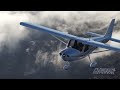 Finally… ANN is proud to present the first published flight test data on Cessna’s long-awaited LSA… the C-162 Skycatcher. Worth the wait, the Cessna 162 may be one of Cessna’s very best efforts yet… thoroughly maximizing what it is to be an LSA… while being true to the outstanding stability and control profiles that have been a part and parcel of Cessna’s entry-level aircraft products for many decades.
Right up front, let us tell you, the Skycatcher does NOT disappoint… it is a thoroughly sweet little airplane with great manners, a pleasant aerodynamic profile, as good a performance envelope as LSA regs allow and on top of all that, is just plain fun to fly. In other words, the Skycatcher is one heck of a nice little airplane and a fitting way for Cessna to put its best foot forward in bringing forth a new generation of entry level airplanes. Of particular note is Garmin’s EXCELLENT G300 glass panel, the easily operated and powerful addition of the TCM O-200D and the WIDE comfy cabin. But More than that… its just a sweetie in the air… simple, reasonably fast, agile and with nary the hint of a bad habit. Yeah, we had a ball with the critter.
Cessna’s minions tell ANN that the SkyCatcher is designed from spinner to tail to set the new standard for an entry-level aircraft. Though manufactured as an LSA, the SkyCatcher meets all the required ASTM standards for certification while providing safety, reliability, and utility.
The airplane is equipped with the proprietary Garmin G300 avionics package, and is powered by a composite propeller mated to a Continental O-200D engine developed specifically for the Light Sport market. It also features a 44-inch wide cabin, ergonomic seats, accessible cargo area, and a unique under-panel center stick control. Cessna claims the industry’s most extensive network of dealers and service centers.
Copyright 2009, Aero-News Network, Inc., ALL Rights Reserved.
FMI: www.cessna.com,
www.aero-tv.net,
www.youtube.com/aerotvnetwork,
www.twitter.com/aeronews
Duration : 0:5:37
Aero-TV: Cirrus Close-Up — The Known Ice Protection System
February 15, 2009
 More “Up Close” Info On GA’s Latest FIKI Certified Bird
Just a few weeks ago, ANN broke the exciting details on Cirrus new “Known Ice Protection” option for Cirrus SR22 and Turbo models. Aircraft are available for sale now, with FAA certification for operations in known icing conditions expected in Q2 of 2009.
The KIP program, called project “KIWI” by the folks who were in on the secret development project, has been years in the making and required extensive engineering, serious rework of the airframe and construction protocols, and lots of flight testing… some of which was fairly intense. There are a number of features inherent in this massive upgrade… extended TKS panels for the wing, vertical stabilizer, horizontal stabilizers (including the very end of the leading edge of the elevator counterbalance), as well as dual rate redundant TKS de-icing fluid pumps, a windshield TKS application system, prop slinger, an ingenious wing/tail icing detection light, heated stall detection vane, larger/dual TKS reservoirs, Perspective software upgrades that monitor the entire works, and so much more…
Cirrus Chairman Alan Klapmeier noted that, “Known Ice Protection completes the picture for many when it comes to reliable, personal transportation. It can allow operations on marginal weather days when icing forecasts would otherwise preclude travel. This means a Cirrus customer gets more utility and ultimately more capability from their airplane investment.”
Alan added that, “An important issue to address up front is although the airplane has completed testing to show its safe to fly in FAA known icing conditions, no one should ever think that this means they can drone along impervious to nature in icing conditions — nature always wins! Of course proper training and decision making is essential for flight safety.”
Developed in partnership with CAV Ice Protection Ltd., the Cirrus SR22 and Turbo Known Ice Protection system has CAV’s fully integrated TKS “weeping wing” technology in …
Duration : 0:6:52

