

NTSB Animation of Marlin Air Cessna Citation Accident Investigation Near Milwaukee Wisconsin
January 17, 2010
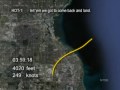 Video courtesy: NTSB
Washington, D.C. – The National Transportation Safety Board today determined that the probable cause of an aircraft that lost control and impacted water was the pilots’ mismanagement of an abnormal flight control situation through improper actions, including lack of crew coordination, and failing to control airspeed and to prioritize control of the airplane.
On June 4, 2007, about 4:00pm CST, a Cessna Citation 550, N550BP, impacted Lake Michigan shortly after departure from General Mitchell International Airport, Milwaukee, Wisconsin (MKE). The two pilots and four passengers were killed, and the airplane was destroyed. The airplane was being operated by Marlin Air under the provisions of Part 135. The aircraft was carrying a human organ for a transplant operation in Michigan. At the time of the accident, marginal visual meteorological conditions prevailed at the surface, and instrument meteorological conditions prevailed aloft; the flight operated on an instrument flight rules flight plan.
Due to the lack of a data recording system, the Board could not determine the exact nature of the initiating event of the accident. However, the evidence indicated that the two most likely scenarios were a runaway trim or the inadvertent engagement of the autopilot, rather than the yaw damper, at takeoff.
The Board further noted that the event was controllable if the captain had not allowed the airspeed and resulting control forces to increase while he tried to troubleshoot the problem. By allowing the airplane’s airspeed to increase while engaging in poorly coordinated troubleshooting efforts, the pilots allowed an abnormal situation to escalate to an emergency.
Therefore, the NTSB concluded that if the pilots had simply maintained a reduced airspeed while they responded to the situation, the aerodynamic forces on the airplane would not have increased significantly. At reduced airspeeds, the pilots should have been able to maintain control of the airplane long enough to either successfully troubleshoot and resolve the problem or return safely to the airport.
Contributing to the accident were Marlin Air’s operational safety deficiencies, including the inadequate checkrides administered by Marlin Air’s chief pilot/check airman, and the Federal Aviation Administration’s (FAA) failure to detect and correct those deficiencies, which placed a pilot who inadequately emphasized safety in the position of company chief pilot and designated check airman and placed an ill-prepared pilot in the first officer’s seat.
Results from the Board’s investigation indicated that the captain did not adhere to procedures or comply with regulations, and that he routinely abbreviated checklists. Subsequently, the NTSB concluded that the pilots’ lack of discipline, lack of in-depth systems knowledge, and failure to adhere to procedures contributed to their inability to cope with anomalies experienced during the accident flight. Thus, the Board also concluded that Marlin Air’s selection of a chief pilot/check airman who failed to comply with procedures and regulations contributed to a culture that allowed an ill-prepared first officer to fly in Part 135 operations.
The report adopted today by the Board, points out that FAA guidance regarding appointment of check airmen requires Principal Operations Inspectors (POI) to verify the check airman candidate’s “certificates and background.” Additionally, all required training must be completed, and the airman’s training records must show satisfactory completion of initial, transition, or upgrade training, as applicable. The guidance does not specifically address POI actions when the background evaluation discloses negative information. This lack of guidance can result in the appointment of check airmen who do not adhere to standards and who possibly jeopardize flight safety.
As a result of this accident investigation, the Safety Board issued recommendations to the FAA, and the American Hospital Association regarding airplane and system deficiencies, FAA oversight, and the safety ramifications of an operator’s financial health.
A summary of the findings of the Board’s report is available on the NTSB’s website at:http://www.ntsb.gov/Publictn/2009/AAR0906.htm
Duration : 0:3:34
Boeing 737 – Flight training
November 23, 2009
 This was the flight training to complete our type rating! We did 30 landings that day! The location was Cottbus a former east german air base!
Duration : 0:3:42
FTX AUSTRALIA COMPLETE: Cessna landing in Hamilton
October 30, 2009
 Copyright © SUPERSONIC PRODUCTIONS 2009.
Carenado Cessna 182 landing in Hamilton, Australia.
“Cessna Landing in Hamilton” was created under Microsoft’s Game Content Usage Rules using assets from Flight Simulator X, © Microsoft Corporation.
Site: http://supersonicproductions.net/
Forum: http://supersonicproductions.net/forum/
Duration : 0:1:17
Cessna 172N Circuit Training
October 23, 2009
 Carenado Cessna 172N Skyhawk II (payware)
Sounds: Default
Scenery: Flight Zone 01 Rhode Island (payware)
Environment: Active Sky 6.5, Real Environment Pro
Traffic: None
Airport code and time: KSFZ. You guys guess the time! 😛 It’s in the video somewhere.
I must say this is one helluva nice aircraft. It’s definitely worth the money and you get what you pay for. You buy a Cessna, you get a Cessna. Everything’s good about this aircraft: the sounds, the flight model, the flying dynamics, etc.
I would recommend it to anyone looking for some GA VFR fun.
Duration : 0:2:53
hangar 9 h9 cessna touch and go / landing
September 7, 2009
 video gets good at 1:30, touch and goes at 3:00 the video quality gets much better at 3:30 hangar 9 cessna with the spektrum dx-7 system.. love this setup it crabbed in a little rough as you can tell but it does so even better now that i have moved the cg slightly aft.. great flying plane i just love touch and goes with this plane!
Duration : 0:7:21
Gleim Pilot Training Audiovisual — ATC and Airspace
October 12, 2008
 Free Excerpt from Gleim’s Pilot Training Audio Visual on ATC and Airspace. Enhance your knowledge with Gleim.
Duration : 0:1:51
Cessna 170 Plane Crash Shady Acres Airstrip – Spanaway WA
October 12, 2008
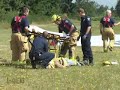 July 7, 2007. Spanaway, WA. The 1951 vintage Cessna flipped during take off, landing upside down on the runway. The pilot and two passengers had a fun ride. One passenger was taken and checked out at a local hospital. The crash totaled the aircraft. The plane is nearly folded in half while being uprighted.
Duration : 0:4:57

