

Canadian National Triathlon Centre
January 29, 2011
Simon Whitfield talks Flagstaff
Which Airport is the closest to Grand Canyon National Park?
December 22, 2010
www.grandcanyon.com When flying to the Grand Canyon, you have your choice of Las Vegas, Nevada, Phoenix and Flagstaff, Arizona. Economically, you will probably choose Las Vegas, but Phoenix will allow you to drive you Sedona and Flagstaff. Flagstaff is actually the closest, but you might want to watch this video and find out if it is the right airport for you.
MCBI: Establishing USA Marine National Monuments
September 25, 2010
Beginning in 2007, the Marine Conservation Biology Institute helped establish the Papahanaumokuakea, the first Marine National Monument in US waters. In 2009 their continued efforts resulted in the Pacific Remote Island Marine National Monuments (including Palmyra Atoll, Kingman Reef, Howland, Baker, Wake and Jarvis Islands and Johnston Atoll); the Rose Atoll National Marine Monument; and the Marianas Trench Marine National Monument. Join Dr. Sylvia Earle, and Dr Lance Morgan of MCBI in a tour of our new marine monuments. Together this act has established 355000 miles of islands and surrounding waters, protecting fish, coral reefs and other significant wildlife from threats ranging from over fishing to climate change.
Grand Canyon National Park – The Pride Of Nature
May 22, 2010
The vicinity of America is like a paradise for tourists with hundreds of destinations to explore and admire. Another such location is the Grand Canyon that epitomizes power and pride of nature.
Along with the gorgeous, natural panoramas, the Grand Canyon National Park also endows with ample of adventures and leisure activities. This blend is quite overwhelming. However, adding spice to its feel, the wildlife and wilderness ambiance is what completes the definition of Grand Canyon.
Traveling to the national park is as interesting as the vistas there. The northern rim of Grand Canyon can be reached from northern areas like Las Vegas. However, most of the tourists prefer explore the southern rim first. It’s quite popular and can be accessed by driving north of Flagstaff for about an hour.
This national park is something that America is, and will always be, extremely proud of, as it conserves some of the most beautiful and extinct wildlife creatures of the world. However, the most spectacular attraction of this place is the Grand Canyon itself. Even after spending 800 hours, a tourist may not be able to watch and enjoy everything that Grand Canyon has to offer.
An activity that cannot be missed while visiting Grand Canyon National Park is hiking. And if you want to experience the ultimate pleasure of this adventure, the best time to visit this place is spring and fall. During these months the temperature is quite pleasing as it isn’t much hot. However, autumn months provides you the opportunity of counting the endless variety of hawks that migrate to south in this period.
Staying overnight is never a problem, if you are at Grand Canyon National Park. In fact, it’s a pleasure. This vicinity embraces 4 historical hotels and about 5 contemporary, chic inns to choose from. With more than five million people visiting this place every year, you cannot expect not to be a good residing destination.
With so much to offer, Grand Canyon adds another appreciating activity to the list – wildlife watching. Don’t fret if a raven crosses by your car, or a vulture sits besides. It’s too common here. Other birds like jays, hawks, and golden eagle can be effortlessly spotted from the rim. Animals like bobcats, coyotes, black bears, mule deer, squirrels, and mountain lions are abundantly available here. However, desert bighorn sheep occupies most of the places of this national park.
If you are an avid explorer, this is definitely a haven for you. Along with places like Tusayan Museum and Kolb Studio, you will also enjoy the views of Painted Desert, Kaibab National Park, and Desert View Watchtower.
Millions of tourists visit Grand Canyon in Arizona due to this extensive blend wildlife, adventures, panoramas, arts, and weather. Being here is definitely the best way to revitalize and re-energize.
The Grand Canyon National Park in Arizona – a Great Vacation and Travel Destination
April 19, 2010
You must plan a vacation to Arizona to see the Grand Canyon. It is just simply amazing and the maze of canyons, fissures, and gorges intertwine and merge to create one of the world’s most amazing natural wonders. You can actually see the different colors of the rock in the many layers that make up the canyon not to mention the way the sun reflects on them, and then the shadow, affects their color, which is awe inspiring in and of itself. The beauty of the Canyon is one thing, the size is another and it is just as amazing if not more so.
The canyon is huge and that may even be an understatement. The canyon measures between 10 and 15 miles wide and is more than 200 miles long. At some parts of the canyon it measures nearly a mile to the bottom. Can you imagine looking over the edge of the canyon and the ground being a mile below? It truly is one of the must see places in the world, let alone the United States. The Grand Canyon National Park includes the Grand Canyon and other sites and is located north of Flagstaff, Arizona, by about 75 miles. It will take about an hour and a half to get to the north rim’s visitor center from Flagstaff, or if you are in Las Vegas plan on a five hour drive. The south rim’s visitor center requires a 200 mile drive although it is only 10 miles away if you could fly your car over!
The south rim is the best place to visit if you are only visiting one of the rims. That is because the views are outstanding and it has more facilities than the north rim center. More tourists visit the south rim because the north rim is closed from October to May. If you are a backpacker or don’t like crowds then you might prefer the north rim. The Grand Canyon Village is a great place to stay when visiting because there are hotels, souvenir shops, and restaurants near the south rim.
The best thing to do when visiting the Grand Canyon is to allow yourself plenty of time. There is a lot to see and although it might look like you can do it all in one day you may not be able to and really enjoy it. So, give yourself plenty of time when you are at the Grand Canyon so you can see all the rims, head down to the basin, whitewater raft, and just enjoy this beautiful natural wonder.
There is a website that has great information on USA Vacations and Unique Travel Spots Listed State By State and Season, the website is called: Seasonal Vacation Spots, and can be found at this url:
By Robert W. Benjamin
Copyright © 2007
You may publish this article in your ezine, newsletter, or on your web site as long as it is reprinted in its entirety and without modification except for formatting needs or grammar corrections.
Grand Canyon National Park: Five Tips to Effectively Travel to the Grand Canyon by Amtrak and Bus
February 21, 2010
Although the Grand Canyon became federally protected in 1893, it did not become a national park until 1919. The park’s uniqueness comes from it sheer size: 277 river miles long, up to 18 miles wide, and a mile deep. In fact, the Grand Canyon is so large that it has two main points of entry, the North and South Rims, which are 215 miles apart for each other.
Fortunately, Grand Canyon National Park’s South Rim has Amtrak service close by on the Southwest Chief. You literally have automobile, train and bus alternatives. Here are five tips/hints for effectively traveling to/from the Grand Canyon by land:
One: If you wish to take the train right up to the Canyon, you can board the Grand Canyon Railway. Once you disembark at Williams Junction, you can take the free shuttle service to the Grand Canyon Hotel and Railway. For those arriving from the west, there is a five hour layoff before the 9:30 am departure to the Canyon. If you are going back west, the train leaves the Canyon at 3:30 pm and arrives at the Grand Canyon Hotel at 5:45 pm. This leaves you with about 3 ½ hours before the shuttle takes you back to the Williams Junction Amtrak station.
Coming from the east, it is not as convenient. Since the Southwest Chief arrives in the late evening, you will probably want to take the shuttle to the Grand Canyon Hotel and stay the night. The hotel is well-appointed and resembles the original Santa Fe Railroad hotel in Williams. After a good breakfast, you will be ready for the 9:30 am departure described above. Going back east, you may also wish to rent a hotel room since the train leaves Williams Junction in the early morning.
Two: If you prefer to travel by bus to the canyon, there is convenient service from the Flagstaff Amtrak station provided by Open Road Shuttle. For those arriving from the west, there is a three hour layover before the 8:00 am departure to the Canyon. If you are going back west, the bus leaves the Maswik Lodge at 6:15 pm and arrives at the Flagstaff Amtrak station at 8:00 pm, which is about an hour before your departure on the Southwest Chief.
Coming from the east, again, it is less convenient. Upon your late evening arrival in Flagstaff, you will probably want to reserve a hotel room before taking the 8:00 am departure described above. Going back east, you may also wish to rent a hotel room since the train leaves Flagstaff in the morning.
Three: You may wish to reserve a rental car for maximum flexibility. Since the Amtrak arrivals and departures in the area are not doing normal business hours, you should probably rent from an airport facility that has extended hours. Your best bet to find such a facility by the Grand Canyon is at the Flagstaff Pulliam Airport. Check with your rental car agency to see whether they can pick you up at the train station or if you will need to take a taxi to get there.
Four: If you really want to go to the North Rim and do not have a car, there is a bus service run by Transcanyon Shuttle. The service leaves the South Rim at 1:30 pm and arrives at the North Rim 4 ½ hours later. The return bus leaves the North Rim at 7:00 am. Obviously, the service runs only form mid-May to mid-October when the North Rim is open.
Five: The Southwest Chief is an all-reserved train. Whether you are experiencing Amtrak’s coach service or the Superliner sleeping accommodations, you must make advanced reservations. By buying your tickets in advance for both Amtrak and local transportation services near the Grand Canyon, you may be able to receive discounted advance purchase fares or special fares for students and seniors.
National guard in kingman violation of Posse Comitatus Welcome to Police State
February 17, 2010
Kingman AZ Friday 18th 2009 around 4.45 pm Downtown on Andy Divine National Guard perfoming “police” duty, providing “security’ and directting traffic. We support our soldiers and troops but we do not support the unlawful deployement of our soldiers on US soil, to “police” the Citizens… A clear violation of the The Posse Comitatus Act Section 1385 of Title 18, United States Code (USC), states: Whoever, except in cases and under circumstances expressly authorized by the Constitution or Act of Congress, willfully uses any part of the Army or Air Force as a posse comitatus or otherwise to execute the laws shall be fined under this title or imprisoned not more than two years, or both. Why and Who is permitting this “unamerican” precedent and violation of the law in Kingman? Are we living in a Police State City?
NTSB Animation of Marlin Air Cessna Citation Accident Investigation Near Milwaukee Wisconsin
January 17, 2010
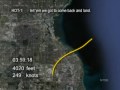 Video courtesy: NTSB
Washington, D.C. – The National Transportation Safety Board today determined that the probable cause of an aircraft that lost control and impacted water was the pilots’ mismanagement of an abnormal flight control situation through improper actions, including lack of crew coordination, and failing to control airspeed and to prioritize control of the airplane.
On June 4, 2007, about 4:00pm CST, a Cessna Citation 550, N550BP, impacted Lake Michigan shortly after departure from General Mitchell International Airport, Milwaukee, Wisconsin (MKE). The two pilots and four passengers were killed, and the airplane was destroyed. The airplane was being operated by Marlin Air under the provisions of Part 135. The aircraft was carrying a human organ for a transplant operation in Michigan. At the time of the accident, marginal visual meteorological conditions prevailed at the surface, and instrument meteorological conditions prevailed aloft; the flight operated on an instrument flight rules flight plan.
Due to the lack of a data recording system, the Board could not determine the exact nature of the initiating event of the accident. However, the evidence indicated that the two most likely scenarios were a runaway trim or the inadvertent engagement of the autopilot, rather than the yaw damper, at takeoff.
The Board further noted that the event was controllable if the captain had not allowed the airspeed and resulting control forces to increase while he tried to troubleshoot the problem. By allowing the airplane’s airspeed to increase while engaging in poorly coordinated troubleshooting efforts, the pilots allowed an abnormal situation to escalate to an emergency.
Therefore, the NTSB concluded that if the pilots had simply maintained a reduced airspeed while they responded to the situation, the aerodynamic forces on the airplane would not have increased significantly. At reduced airspeeds, the pilots should have been able to maintain control of the airplane long enough to either successfully troubleshoot and resolve the problem or return safely to the airport.
Contributing to the accident were Marlin Air’s operational safety deficiencies, including the inadequate checkrides administered by Marlin Air’s chief pilot/check airman, and the Federal Aviation Administration’s (FAA) failure to detect and correct those deficiencies, which placed a pilot who inadequately emphasized safety in the position of company chief pilot and designated check airman and placed an ill-prepared pilot in the first officer’s seat.
Results from the Board’s investigation indicated that the captain did not adhere to procedures or comply with regulations, and that he routinely abbreviated checklists. Subsequently, the NTSB concluded that the pilots’ lack of discipline, lack of in-depth systems knowledge, and failure to adhere to procedures contributed to their inability to cope with anomalies experienced during the accident flight. Thus, the Board also concluded that Marlin Air’s selection of a chief pilot/check airman who failed to comply with procedures and regulations contributed to a culture that allowed an ill-prepared first officer to fly in Part 135 operations.
The report adopted today by the Board, points out that FAA guidance regarding appointment of check airmen requires Principal Operations Inspectors (POI) to verify the check airman candidate’s “certificates and background.” Additionally, all required training must be completed, and the airman’s training records must show satisfactory completion of initial, transition, or upgrade training, as applicable. The guidance does not specifically address POI actions when the background evaluation discloses negative information. This lack of guidance can result in the appointment of check airmen who do not adhere to standards and who possibly jeopardize flight safety.
As a result of this accident investigation, the Safety Board issued recommendations to the FAA, and the American Hospital Association regarding airplane and system deficiencies, FAA oversight, and the safety ramifications of an operator’s financial health.
A summary of the findings of the Board’s report is available on the NTSB’s website at:http://www.ntsb.gov/Publictn/2009/AAR0906.htm
Duration : 0:3:34
Flying Floats 1973 Vintage FAA Aviation Training Film
August 3, 2009
 Flying Floats 1973 Vintage FAA Aviation Training Film
Duration : 0:19:13
Wake Turbulence Avoidance – A Pilot and Air Traffic Controller Briefing 1995
July 23, 2009
 Vintage Federal Aviation Administration training film.
Courtesy: public.resource.org
Wake Turbulence Avoidance – A Pilot and Air Traffic Controller Briefing AVA19661VNB1, 1995
Video production using re-enactments and animation to illustrate the hazards and physical dynamics of wake turbulence caused by aircraft.
http://www.ntis.gov/search/product.aspx?ABBR=AVA19661VNB1
Duration : 0:24:16

